Three.js Game Skills
Nine Codex and Claude Code skills for building polished Three.js browser games: one director skill routes gameplay, graphics, UI, assets, audio, debug and release checks.
- By Majid Manzarpour
- Claude Code
- Codex
- MIT
- Source repository
Three.js Game Skills is a pack of nine skills for Codex and Claude Code, installed in one command. Rather than asking you to remember which specialist to call, you name the director skill and it routes the work itself: gameplay, graphics, UI, asset generation, audio, debugging and release verification. The pack also ships the runtime materials an agent needs, including a Vite + TypeScript + Three.js scaffold inside the skill folders, deterministic test hooks, a seeded RNG, and Playwright templates for smoke tests, visual-regression baselines and bot playtests.
The author's own five browser demos are listed in the README. Two of them, Starship Dogfight and Ripcore, are on this site. The README names no model: it says no particular model and no paid API key are required.
Install
npx skills add majidmanzarpour/threejs-game-skills --skill '*' -a claude-code -g -y
Then tell your agent what to make
Use threejs-game-director to build a premium futuristic tower defense game from scratch.
Automatically use the relevant gameplay, graphics, UI, asset generation, audio, debug,
and QA skills. Build a playable loop first, then iterate until it passes browser,
mobile, visual, UI, performance, and release checks.
Games made with Three.js Game Skills
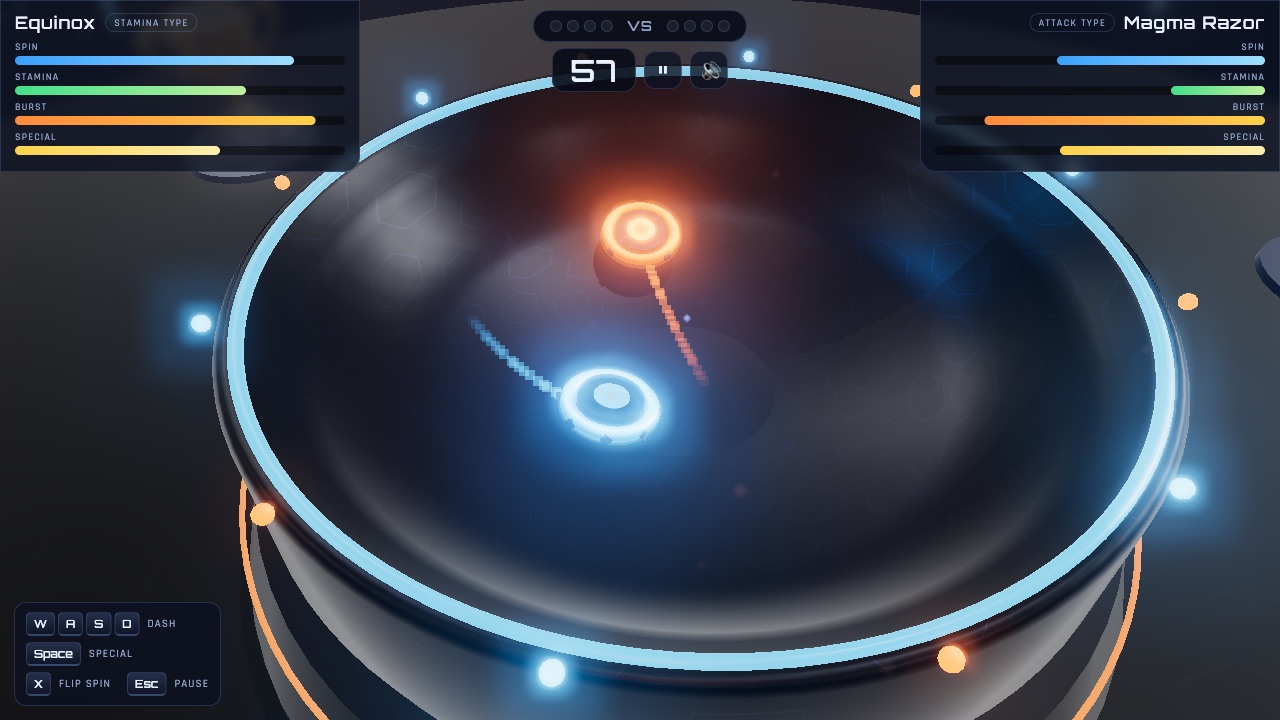 Play Author-hosted New Mobile Friendly
Ripcore
Two spinning tops in a steel bowl: pull back to aim and set power, release to rip, first to four points.
- —
- —
- 6
- Arena
- Physics
- Three.js
- WebGL
- 1v1
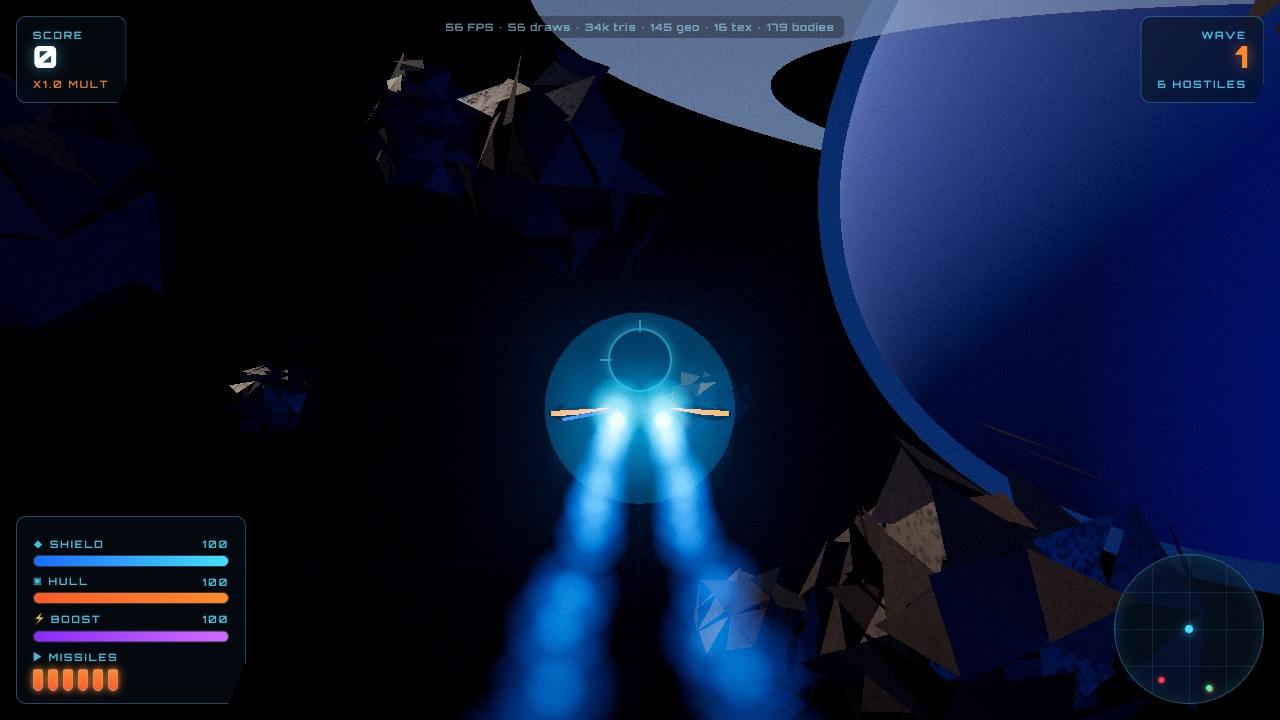 Play Author-hosted New Desktop Only
Starship Dogfight
A third-person space dogfight over an asteroid belt: endless waves, six missiles, and a Dreadnought every fifth wave.
- —
- —
- 5
- Space Combat
- Three.js
- WebGL
- Waves
- 3D
What it does
- Routes instead of asking. The director preserves your scope and art direction, uses specialist guidance automatically, delegates independent work when the runner supports it, and scales verification to the change: a full game gets a complete production pass, a small HUD fix stays a small HUD fix.
- Ships a scaffold with test hooks. A packaged Vite + TypeScript + Three.js game scaffold, used internally when you start from an empty folder. It carries deterministic test hooks, a seeded RNG and templates for smoke tests and visual-regression baselines, so the agent can check its own work without you wiring anything up.
- Treats art direction as a budget. The graphics skill works from a visual scorecard with calibration reference screenshots and target-versus-actual technical art budgets, so "premium" is something measured rather than asserted.
- Verifies in the browser. A packaged inspector reports canvas pixel metrics (colour entropy, edge density, luminance contrast) and render-budget rows, and can capture every declared viewport and state in one browser under one run ID.
- Generates assets only if you have keys. Tripo for 3D models, Gemini for images, ElevenLabs for audio. With no key, or with credits exhausted, it continues on procedural and local assets and reports the limitation instead of failing.
What you need
- Node.js and npx
- Installing the skills and running the scaffold
- Without it: Required
- Claude Code or Codex
- The runner the skills are written for
- Without it: Required; the installer copies into the runner's skills folder
- Tripo API key
- Text, image or multiview to 3D hero models, rigging, animation
- Without it: Procedural and local assets; the README notes procedural code alone rarely makes a premium hero model
- Gemini image key
- Concept art, textures, skies, decals, icons, GUI and title art
- Without it: Procedural and local assets
- ElevenLabs key
- SFX, music, ambience, UI sounds, voice
- Without it: No generated audio
Before you start
- The README quotes no token count, no build time and no number of play-testing rounds. Nothing on this page promises a duration.
- No model is named and no paid key is needed: the core Three.js skills work without any provider key, and the README says explicitly that no particular model is required.
- Background tools, subagents, native async execution and steering depend on the host. Installing the skills does not enable an API feature or change your model settings; when delegation is unavailable the agent works directly.
- The README is firm about evidence: a premium or AAA claim should not rest on a static scene, placeholder cubes, generic stat-card HUDs or unverified screenshots, and helper tests passing is not a claim of improved visual quality.
- Users are not expected to run the scaffold or the QA scripts by hand. They are packaged so the agent can use them inside the workflow.
FAQ
- How do I install Three.js Game Skills?
- One command per agent, from the README: `npx skills add majidmanzarpour/threejs-game-skills --skill '*' -a claude-code -g -y` for Claude Code, or `-a codex` for Codex. From a cloned checkout you can run ./install.sh --claude, --codex or --all instead.
- Do I have to pick which specialist skill to use?
- No. The README says to name the director skill for anything broad and it loads the sibling skills itself. In Claude Code that is /threejs-game-director or simply naming it in a prompt; in Codex it is $threejs-game-director.
- Do I need paid API keys?
- No. The core Three.js skills work without them. Tripo, Gemini and ElevenLabs keys are optional and only add generated 3D models, images and audio; without them the director continues on procedural and local assets and reports the affected limitation.
- Which of its demos can I play here?
- Starship Dogfight and Ripcore. The README's demos table lists five games: Neon Ridge Drift, Championship Snooker Arena, Starship Dogfight, Tide Singer and Ripcore.
- What licence is it under?
- MIT. This page only describes the pack and links to the author's repository.
MIT. This page describes the skill and links to Majid Manzarpour's repository; the skill's files live there. GitHub
All game-making skills